Choosing a new climate control system for your Orlando home is a significant investment. With blistering summer heat and surprisingly chilly winter nights, you need a solution that is both powerful and efficient. For decades, the traditional central air conditioner was the default choice. Today, modern heat pumps present a compelling, high-efficiency alternative that is perfectly suited for the Central Florida climate.
But how do you decide? The debate between a heat pump and a traditional AC isn't just about brand names or upfront cost. It’s about understanding which technology offers the best performance, long-term value, and superior comfort for your family in our unique, humid environment. This guide breaks down the critical differences to help you make an informed decision, focusing on what truly matters to Orlando homeowners: cooling power, humidity control, and year-round energy savings.
What is the Difference Between a Heat Pump and an AC?
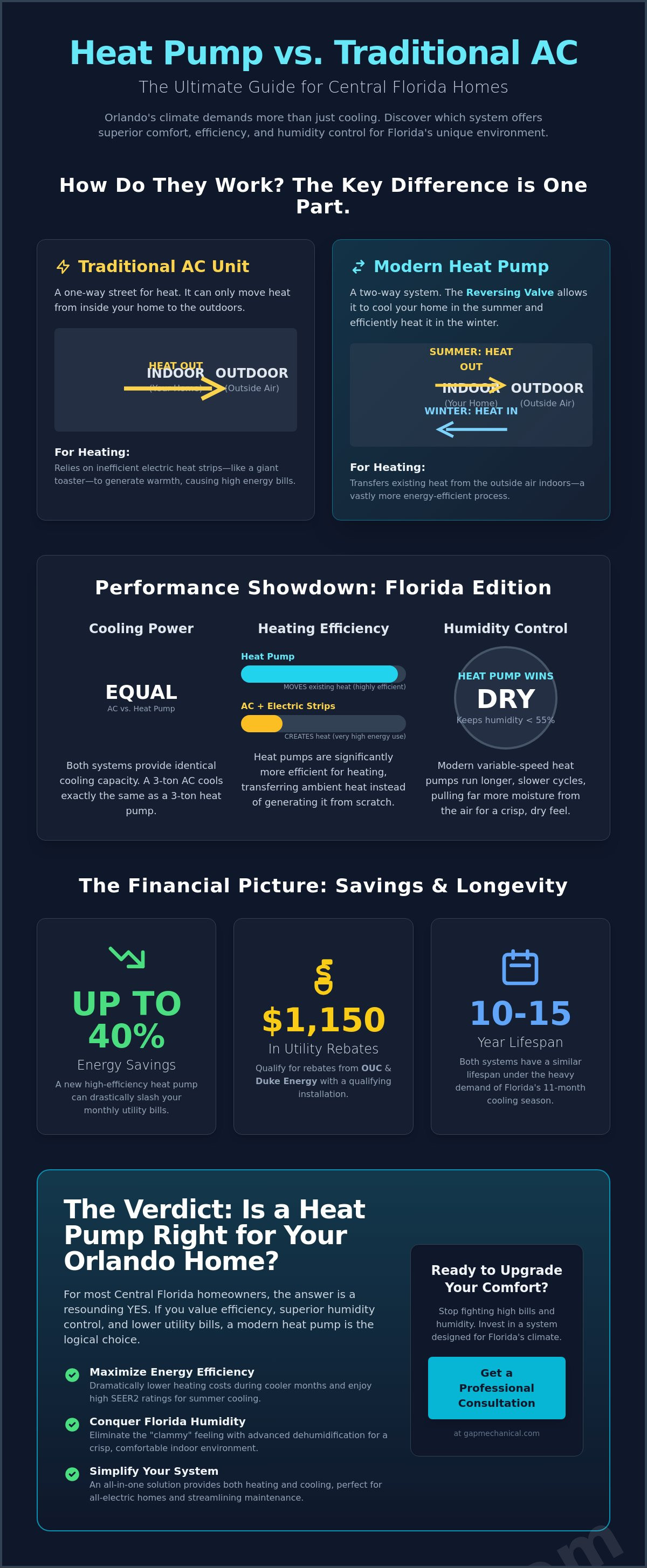
At their core, both heat pumps and traditional air conditioners operate on the same principle for cooling: the refrigeration cycle. They use a refrigerant to absorb heat from inside your home and transfer it outside, leaving you with cool, comfortable air. The key distinction lies in a single, ingenious component: the reversing valve.
- Shared Cooling Technology: Both systems use an indoor evaporator coil and an outdoor condenser unit to cool your home. For pure cooling power, a 3-ton heat pump is just as effective as a 3-ton AC unit.
- The Reversing Valve: This is the primary mechanical differentiator. A heat pump contains a reversing valve that allows it to reverse the flow of refrigerant. In winter, this enables the system to absorb heat from the outdoor air (even when it feels cold) and transfer it inside your home.
- Heating Method: A traditional AC can only cool. For warmth, it must be paired with a separate heating system, which in most Orlando homes is an electric resistance heat strip. These are notoriously inefficient.
- All-in-One System: Because a heat pump can both heat and cool, it functions as a single, all-in-one climate control system, making it an ideal solution for Southern climates where extreme winter heating is unnecessary.
How a Traditional Central AC Works
A central air conditioning system is a one-way street for heat. The evaporator coil inside your home’s air handler absorbs heat from your indoor air, and the refrigerant carries that heat to the outdoor condenser unit, where it's released. This cycle repeats until your thermostat's set temperature is reached.
- Heat Removal: The main job of the evaporator and condenser is to remove heat from your home, not to "create" cold air.
- Reliance on Heat Strips: When you need heat, the AC system turns off and a separate set of electric resistance coils (similar to those in a toaster) located in your air handler glow hot. The blower then pushes air over these strips to warm your home. This method is simple but consumes a massive amount of electricity.
- Florida Lifespan: A standard central AC unit in Central Florida typically lasts 10 to 15 years. Its longevity is often challenged by the corrosive effects of salt air, high humidity, and constant use during long summers.
The Heat Pump Mechanism Explained
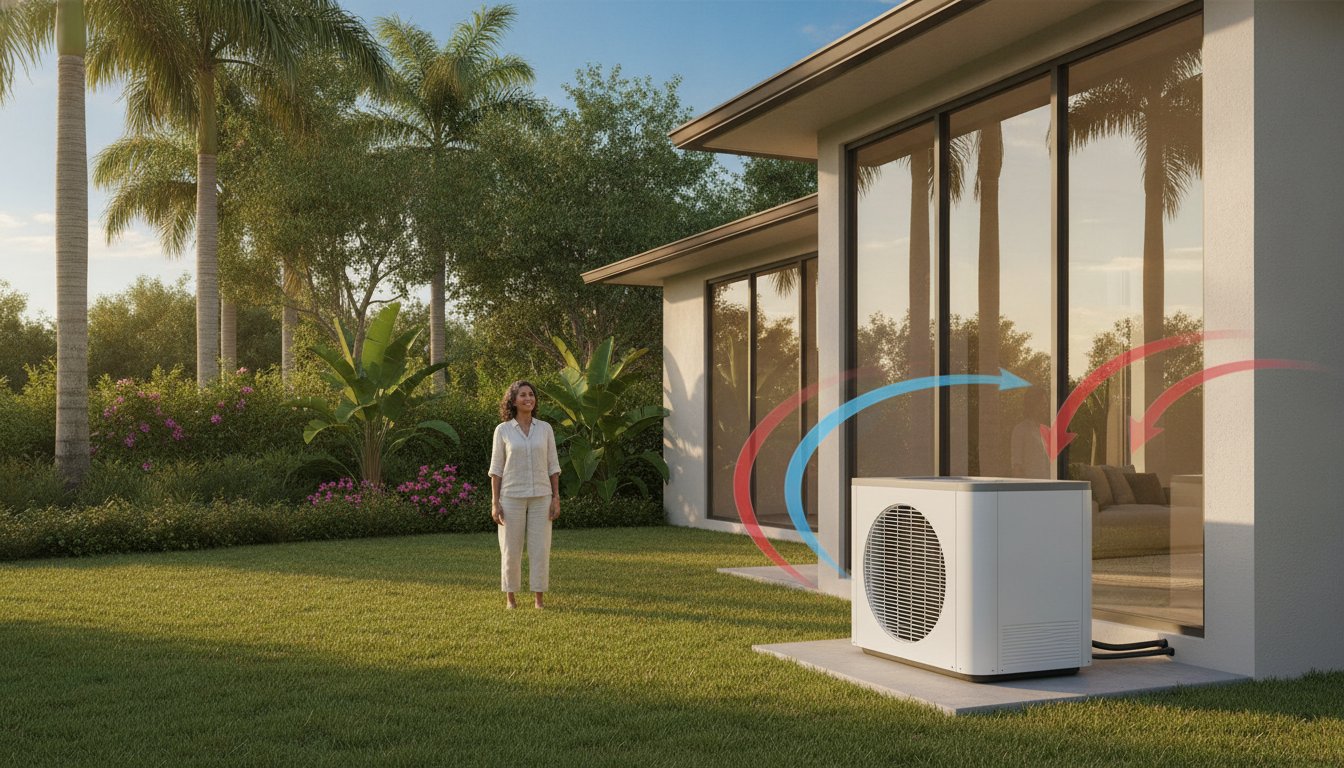
A heat pump is a more versatile and intelligent system. During the summer, it functions exactly like a traditional AC. In the winter, the reversing valve flips the script. The outdoor coil becomes the evaporator, pulling latent heat from the ambient air, and the indoor coil becomes the condenser, releasing that heat into your home.
- Moving Heat vs. Generating It: The genius of a heat pump is that it moves existing heat from one place to another. This process of heat transfer is dramatically more energy-efficient than generating heat through electric resistance.
- Unmatched Efficiency: Because it’s not burning fuel or heating up electric coils, a heat pump can deliver up to four times the amount of energy it consumes. This translates directly into lower winter utility bills.
- The Simple Definition: A heat pump is a reversible refrigeration system that provides highly efficient, year-round climate control in a single unit.
Performance Comparison: Cooling, Heating, and Dehumidification
In Orlando, your HVAC system’s biggest enemy isn’t just the heat—it’s the oppressive humidity. A system that can’t effectively manage moisture will leave you feeling sticky and uncomfortable, even if the thermostat reads 74°F. This is where modern heat pumps often gain a significant advantage.
- Cooling Capacity: When matched for size (tonnage) and efficiency (SEER2 rating), a heat pump and a traditional AC provide identical cooling power. Both are fully capable of handling Orlando's 100-degree summer days.
- Dehumidification: High-efficiency, variable-speed heat pumps are superior at dehumidification. They can run at lower speeds for longer periods, allowing the indoor coil more time to condense and drain away moisture from the air without over-cooling your home.
- Heating Performance: During Central Florida's brief cold snaps, a heat pump is the clear winner. It can efficiently heat your home when outdoor temperatures are in the 40s and 50s, using a fraction of the electricity required by heat strips.
- "Dry Mode" Feature: Many modern heat pumps include a "Dry Mode," which prioritizes humidity removal over temperature reduction—a perfect feature for those muggy, overcast Florida days.
Managing Orlando's Humidity
Controlling indoor humidity is arguably more critical for comfort in Florida than achieving a specific temperature. High humidity can lead to mold growth, dust mite proliferation, and that constant clammy feeling. An effective HVAC system is your first line of defense.
- Comfort is Key: Proper humidity control allows you to feel comfortable at a higher thermostat setting, which saves energy. Dry, 76-degree air often feels more pleasant than damp, 73-degree air.
- Longer, Slower Cycles: The key to removing moisture is contact time between the air and the cold evaporator coil. Variable-speed heat pumps excel here, as their long, slow cycles pull significantly more water from the air compared to the short, powerful blasts of a single-stage AC.
- Indoor Air Quality: By keeping humidity levels in check, a well-maintained heat pump helps improve overall indoor air quality and protects your home and furnishings from moisture-related damage.
Heating Efficiency in Mild Climates
The fear that a heat pump won't work in the cold is a myth rooted in their performance in northern, freezing climates. In Orlando's mild winters, a heat pump operates well within its optimal range.
- The Cost of Electric Heat Strips: Running electric heat strips is the most expensive way to heat a home. A heat pump is 300-400% more efficient, meaning your heating costs can be reduced by as much as 75% during a cold spell.
- Performance Threshold: Modern heat pumps work efficiently down to temperatures around 35-40°F. Since Orlando rarely sees temperatures drop below this for extended periods, it remains the superior heating choice almost all winter.
- "Emergency Heat": All heat pumps installed in Florida include a supplemental heat strip for backup. This "emergency heat" setting automatically kicks in if the outdoor temperature drops near freezing or if you manually raise the thermostat by several degrees at once. It ensures you always have heat, but you'll notice the impact on your electric bill.
Calculating ROI: Efficiency Ratings and Energy Savings
While a high-efficiency heat pump may have a higher upfront cost than a basic AC unit, the return on investment comes from significant, year-round energy savings. Understanding modern efficiency ratings is the first step to calculating your potential ROI.
- SEER2 and HSPF2: These are the two key ratings. SEER2 (Seasonal Energy Efficiency Ratio 2) measures cooling efficiency, while HSPF2 (Heating Seasonal Performance Factor 2) measures heating efficiency. The higher the number, the less electricity the unit uses.
- Utility Bill Impact: Upgrading from an older 10 SEER unit to a modern 18 SEER2 heat pump can cut your cooling costs by nearly 50%. When you add the savings from avoiding inefficient heat strips in the winter, the annual savings are substantial.
- Rebates and Tax Credits: Both federal and local programs often provide incentives for homeowners who install high-efficiency heat pumps. These can significantly reduce the initial purchase price.
- Break-Even Point: For many Orlando homeowners, the monthly energy savings are enough to offset the higher initial cost within 3 to 5 years, making it a sound financial decision for anyone planning to stay in their home long-term.
Understanding SEER2 Ratings in 2026
In 2023, the Department of Energy updated its testing standards and efficiency metrics from SEER to SEER2. This new standard more accurately reflects real-world operating conditions, especially in hot, humid climates like Florida's.
- The Shift to SEER2: The new testing procedures account for higher static pressure, meaning they better simulate how systems perform with modern ductwork. This gives homeowners a more realistic expectation of energy consumption.
- Minimum Efficiency in Florida: As of 2023, the minimum efficiency for new installations in the Southeast region is 14.3 SEER2 (equivalent to the old 15 SEER). Standards are expected to continue rising, making high-efficiency units a future-proof investment.
- Efficiency and Performance: A higher SEER2 rating directly correlates to lower amperage draw during peak Orlando heat, reducing strain on your home's electrical system and lowering your utility bills.
Local Rebates and Incentives
Investing in energy efficiency pays off. Central Florida homeowners have access to several programs designed to make upgrading to a high-efficiency heat pump more affordable.
- Utility Rebates: Utilities like Duke Energy and the Orlando Utilities Commission (OUC) frequently offer rebates for installing qualifying high-SEER2 systems. These programs change, so it's essential to check with your provider for current offers.
- Federal Tax Credits: The Inflation Reduction Act provides significant federal tax credits for homeowners who install new, energy-efficient heat pumps. These credits can save you hundreds of dollars on your installation.
- Flexible Financing: The upfront cost of a new system can be a major hurdle. At GAP Mechanical, we offer flexible HVAC financing options in Orlando to help you get the high-efficiency system you need with manageable monthly payments.
Repair and Maintenance: What to Expect in Central Florida
Both heat pumps and traditional AC units are complex machines that require regular maintenance to perform reliably in Florida's demanding climate. While they share many components, heat pumps have a few unique parts that can require specialized service.
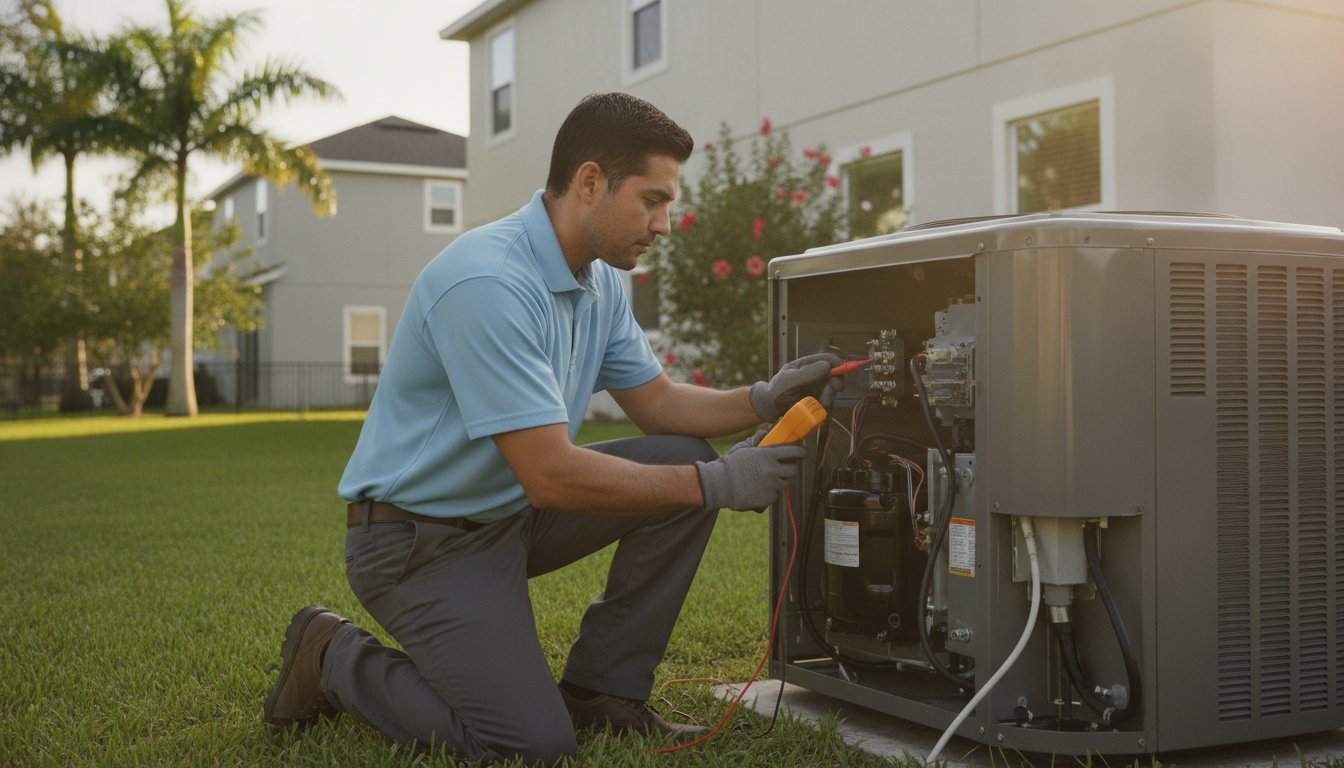
- Heat Pump-Specific Issues: The most common issues unique to heat pumps involve the reversing valve or the defrost control board. If your unit gets stuck in heating or cooling mode, a faulty reversing valve is often the culprit. When you need professional heat pump repair in Orlando, our certified technicians have the diagnostic tools to pinpoint these specific failures.
- Traditional AC Issues: Common AC repairs include failed capacitors (which help the motors start), refrigerant leaks, and clogged condensate drain lines.
- The Importance of Professional Service: Whether you have a heat pump or a standard AC, prompt and professional AC repair in Orlando is critical to prevent small problems from becoming catastrophic failures.
- The "Florida Factor": Our environment is tough on outdoor units. The combination of high humidity, salt in the air (even inland), and pests like lizards can corrode coils and short out electrical components, making preventative maintenance essential.
Common Heat Pump Repair Needs
Because a heat pump runs year-round for both heating and cooling, it accumulates more run time than a traditional AC. This makes proactive maintenance even more important. Key components to watch are the reversing valve and its related sensors.
- Troubleshooting the Reversing Valve: A stuck or failing reversing valve is the most frequent heat pump-specific repair. Our technicians can diagnose whether the issue is with the valve's solenoid or the valve itself.
- Defrost Cycle Issues: In colder weather, the outdoor coil can frost over. The defrost cycle temporarily reverses the system to melt this ice. While rare in Florida, a malfunctioning defrost board can cause problems.
- When to Call for Service: If your system is making unusual noises, failing to switch between heating and cooling, or blowing lukewarm air, it's time to call for expert service. For homeowners in nearby communities, we also provide expert AC repair in Kissimmee, FL.
Preventive Maintenance for Longevity
The number one cause of premature HVAC system failure in Florida is neglect. A simple, affordable maintenance plan can save you thousands in avoidable repairs and extend the life of your equipment.
- Clear Condensate Drains: In our humid climate, your system removes gallons of water from the air every day. A clogged drain line can cause water to back up, leading to serious water damage and system shutdowns.
- Coil Cleaning is Non-Negotiable: Your indoor and outdoor coils must be clean to facilitate heat transfer. A layer of dirt or grime acts as an insulator, forcing your system to work harder, use more energy, and wear out faster.
- Regular Tune-Ups: An annual tune-up allows a technician to check refrigerant levels, tighten electrical connections, lubricate motors, and catch small issues before they escalate into costly breakdowns.
The Verdict: Is a Heat Pump Right for Your Orlando Home?
After comparing performance, efficiency, and long-term costs, the choice for most Orlando homeowners becomes clear. However, the right answer depends on your specific situation, budget, and priorities.
- Ideal Candidate for a Heat Pump: Homeowners with all-electric systems, those struggling with high utility bills, or anyone looking to maximize energy efficiency and comfort will benefit most from a heat pump.
- When a Traditional AC Still Makes Sense: If you have an existing (and relatively new) natural gas furnace for heating, or if the lowest possible upfront installation cost is your absolute top priority, a traditional AC might be the more practical choice.
- Decision Checklist:
- What is my primary heating source now? (Electric strips or gas?)
- Is lowering my monthly electric bill a top priority?
- How important is superior humidity control to my family's comfort?
- How long do I plan to live in my current home?
- Consult a Professional: The best way to make the final decision is to consult with a local, licensed HVAC contractor. They can perform a proper load calculation on your home to ensure any new system is sized correctly and provide a detailed cost-benefit analysis.
When to Choose a Heat Pump
A heat pump is the superior choice if:
- You want the lowest possible monthly operating costs for both heating and cooling.
- Your home is currently 100% electric, relying on inefficient heat strips for winter warmth.
- You are planning to stay in your home for 5+ years, allowing you to realize the full ROI from energy savings.
- You want the best possible dehumidification performance for ultimate indoor comfort.
When to Stick with Traditional AC
A traditional air conditioner may be the better option if:
- You have a functioning and efficient natural gas furnace for heating.
- The lowest possible upfront installation cost is the most important factor in your decision.
- You are planning to move in the next 1-2 years and may not recoup the additional investment.
Ready to decide? The team at GAP Mechanical has over 25 years of experience helping Orlando homeowners choose the perfect system for their needs and budget. Schedule a professional system evaluation with GAP Mechanical today and let our experts provide you with a clear, no-pressure recommendation.
Frequently Asked Questions
Is a heat pump more expensive to repair than a traditional AC in Orlando?
Generally, repair costs are comparable for shared components like fans, motors, and capacitors. A repair involving a heat-pump-specific part, like the reversing valve, can be more complex and therefore more costly than a standard AC repair. However, with regular maintenance, these failures are uncommon.
Can a heat pump handle the 100-degree days in Central Florida?
Absolutely. For cooling, a heat pump is identical to an air conditioner. A properly sized heat pump from a quality manufacturer will have no trouble keeping your Orlando home cool and comfortable even during the most intense summer heatwaves.
How much can I actually save on my electric bill by switching to a heat pump?
Savings vary based on your home's insulation, the age of your old system, and your thermostat habits. However, homeowners switching from an older AC with electric heat strips to a new high-efficiency heat pump can often see a 30-50% reduction in their annual heating and cooling costs.
Do heat pumps last as long as traditional air conditioners in Florida?
Yes. Both systems have a similar expected lifespan of 10-15 years in the Florida climate. Because a heat pump runs year-round, some argue it experiences more wear. However, this is offset by the fact that it is a single, integrated system rather than two separate ones. Regular maintenance is the key to longevity for either system.
What happens if it actually freezes in Orlando—will my heat pump still work?
Yes. While a heat pump's efficiency decreases as the temperature drops near freezing, it will still produce heat. For those rare, truly frigid nights, your system's built-in auxiliary heat strips will automatically turn on to supplement the heat pump and keep your home warm.
Is it worth upgrading to a heat pump if my current AC is only 8 years old?
It depends. If your current AC is functioning well and you have a gas furnace, it may be best to wait. However, if your 8-year-old system requires a major repair (like a compressor replacement) and you rely on electric heat strips, the energy savings from upgrading to a new heat pump could make the investment worthwhile.
Does a heat pump require different ductwork than a central AC?
No. If you have an existing central AC system, a heat pump can typically use the same ductwork without any modifications, making it a straightforward replacement.
What are the most common signs that my heat pump needs immediate repair?
The most common signs include loud or unusual noises (grinding, squealing), the system blowing lukewarm or cold air when in heat mode, short cycling (turning on and off frequently), or a sudden, unexplained spike in your energy bills. If you notice any of these, you should schedule a service call for heat pump repair in Orlando to prevent further damage.